Selective Cytotoxicity and Therapeutic Implications of Diphenyltin(IV) N-Methyl-N-Benzyldithiocarbamate in HepG2 and HEK-293 Cell Models
 , Nur Alia Safiya Mohd Faishall1* and Nurul Farahana Kamaludin2
1Environmental Health and Industrial Safety Programme, Faculty of Health Sciences, Universiti Kebangsaan Malaysia, Jalan Raja Muda Abdul Aziz, Kuala Lumpur, Malaysia.
2Center of Toxicology and Health Risk Studies, Faculty of Health Sciences, Universiti Kebangsaan Malaysia, Jalan Raja Muda Abdul Aziz, Kuala Lumpur, Malaysia.
Corresponding Author Email:norm@ukm.edu.my
DOI : http://dx.doi.org/10.13005/ojc/420217
Download this article as:

The increasing global burden of cancer necessitates the development of therapeutic agents that combine strong antitumor activity with acceptable safety profiles. Organotin(IV) complexes have emerged as promising bioactive compounds; however, achieving selective toxicity toward malignant cells remains a major challenge. In this study, the cytotoxic activity of diphenyltin(IV) N-methyl-N-benzyldithiocarbamate was evaluated in hepatocellular carcinoma (HepG2) cells and non-malignant human embryonic kidney (HEK-293) cells using the MTT viability assay following 24 h exposure. The compound demonstrated strong growth inhibition at low micromolar concentrations, with IC₅₀ values of 2.20 ± 0.42 µM in HepG2 cells and 0.48 ± 0.12 µM in HEK-293 cells. The calculated selectivity index (0.22) indicates greater susceptibility of normal cells relative to malignant cells. Morphological assessment revealed cellular condensation, membrane blebbing, and apoptotic body formation, while higher concentrations produced structural features consistent with necrotic progression. Although the compound exhibits pronounced antiproliferative potency, its limited cancer selectivity currently restricts therapeutic applicability. These findings highlight the need for rational structural optimization of organotin dithiocarbamate complexes to enhance tumor selectivity while maintaining cytotoxic efficacy.
KEYWORDS:Cytotoxicity; Diphenyltin(IV); Dithiocarbamate; HEK-293 cells; HepG2 cells; MTT assay; Organotin(IV) compounds
Introduction
Cancer remains a leading cause of mortality worldwide and represents a significant global health burden (Gao et al., 2022). Among solid malignancies, hepatocellular carcinoma (HCC) presents particular clinical challenges due to late diagnosis, high recurrence rates, and the frequent coexistence of underlying cirrhosis (Shaaban et al., 2014). Epidemiological projections suggest a continued rise in HCC incidence by 2040, including in Malaysia (Jain et al., 2024). These realities underscore the need for innovative therapeutic strategies.
Metal-based chemotherapeutics have historically transformed cancer management, most notably following the introduction of platinum compounds. Nevertheless, cumulative toxicity and acquired resistance continue to limit their long-term effectiveness (Hamaya et al., 2023). Consequently, attention has shifted toward alternative metal centers capable of maintaining cytotoxic efficacy while potentially offering improved pharmacological profiles.
Organotin(IV) complexes are distinguished by their structural versatility and diverse biological activities (Syed Annuar et al., 2022). The incorporation of dithiocarbamate ligands enhances lipophilicity and stabilizes the metal center, factors that may facilitate membrane penetration and biomolecular interactions (Erfan et al., 2024; Hadi et al., 2024). Mechanistically, organotin derivatives have been proposed to disrupt membrane phospholipid integrity and interact with nucleic acid phosphate backbones, thereby activating cell death pathways (Attanzio et al., 2020). Compounds exhibiting IC₅₀ values below 10 µg/mL are generally considered promising for further investigation (Hamid et al., 2020). However, cytotoxic potency alone is insufficient; selective targeting of malignant cells is essential to ensure therapeutic viability.
The present study therefore evaluated both the antiproliferative activity and selectivity profile of diphenyltin(IV) N-methyl-N-benzyldithiocarbamate in malignant HepG2 cells relative to non-malignant HEK-293 cells.
Materials and Methods
Cell Culture and Maintenance
Human hepatocellular carcinoma cells (HepG2; ATCC HB-8065) and human embryonic kidney cells (HEK-293; ATCC CRL-1573) were selected to represent malignant hepatic and non-malignant epithelial models, respectively. Both cell lines were cultured in Dulbecco’s Modified Eagle’s Medium (DMEM) supplemented with 10% (v/v) heat-inactivated fetal bovine serum and 1% (v/v) penicillin–streptomycin to ensure optimal growth and sterility. Cells were maintained at 37°C in a humidified incubator with 5% CO₂. Subculturing was performed before reaching 70–80% confluence to prevent contact inhibition and to maintain exponential growth kinetics. Only cells within a consistent passage range were used to minimize variability associated with phenotypic drift.
Preparation of Test Compound and Controls
Diphenyltin(IV) N-methyl-N-benzyldithiocarbamate was prepared as a concentrated stock solution in dimethyl sulfoxide (DMSO). Immediately prior to each experiment, serial dilutions were prepared in complete culture medium to obtain final working concentrations ranging from 0.156 to 10.000 µM. The final DMSO concentration was carefully maintained at ≤0.1% (v/v) in all treatment conditions, including vehicle controls, to exclude solvent-induced cytotoxicity. Menadione (3.125–200.000 µM) was employed as a positive control due to its well-established capacity to induce oxidative stress–mediated cell death.
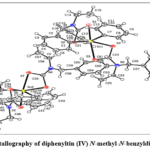 |
Figure 1: Crystallography of diphenyltin (IV) N-methyl-N-benzyldithiocarbamate Click here to View Figure |
MTT-Based Viability Assessment
Cellular metabolic activity was evaluated using the MTT reduction assay as originally described by Mosmann (1983), with minor procedural refinements to optimize reproducibility. Briefly, cells were seeded in 96-well plates at densities sufficient to achieve logarithmic growth during the exposure period. Following 24-hour treatment with either the test compound or controls, MTT solution was added to each well and incubated to allow mitochondrial dehydrogenases in viable cells to convert the tetrazolium salt into insoluble formazan crystals. After incubation, the medium was carefully removed, and the crystals were solubilized in DMSO to ensure complete dissolution. Absorbance was measured at 570 nm using a microplate reader. Cell viability was expressed as a percentage relative to untreated controls. Dose–response curves were constructed using nonlinear regression analysis, and half-maximal inhibitory concentrations (IC₅₀ values) were calculated accordingly.
Determination of Selectivity Index
To evaluate preferential cytotoxicity, the selectivity index (SI) was calculated by comparing the IC₅₀ value in malignant HepG2 cells with that in non-malignant HEK-293 cells, following the approach described by Kamiloglu et al. (2020). Compounds with SI values exceeding 2 are generally considered to exhibit favorable cancer selectivity.
Morphological Examination
To complement quantitative viability data, morphological changes were assessed in cells treated at their respective IC₅₀ concentrations for 24 h. Observations were conducted using an inverted light microscope at 10× magnification. Particular attention was given to structural features commonly associated with apoptosis, including cellular shrinkage, chromatin condensation (where visible), membrane blebbing, and formation of apoptotic bodies. Features suggestive of necrotic progression, such as cellular swelling and membrane disruption, were also documented.
Statistical Analysis
All experiments were independently repeated three times. Data are presented as mean ± standard error of the mean (SEM). Normality testing was conducted prior to inferential analysis. Depending on distribution characteristics, either one-way ANOVA or the Kruskal–Wallis test was applied using SPSS version 27. Statistical significance was defined as p < 0.05.
Results
Cytotoxic Response to Diphenyltin(IV) N-Methyl-N-Benzyldithiocarbamate
Exposure of HepG2 and HEK-293 cells to diphenyltin(IV) N-methyl-N-benzyldithiocarbamate for 24 hours resulted in a pronounced, concentration-dependent decline in cellular metabolic activity, as quantified by MTT reduction. The dose–response curves demonstrated a consistent downward trend across all tested concentrations, indicating that the compound exerts a robust inhibitory effect even at submicromolar levels.
In HepG2 cells, the calculated IC₅₀ value of 2.20 ± 0.42 µM reflects substantial antiproliferative activity within the low micromolar range. This degree of potency suggests effective intracellular interaction, potentially facilitated by the lipophilic diphenyl moiety and the coordinating dithiocarbamate ligand, which may enhance membrane permeability and intracellular bioavailability. The relatively steep slope of the dose–response curve further indicates that small incremental increases in concentration produce measurable reductions in viability, implying a strong pharmacodynamic effect.
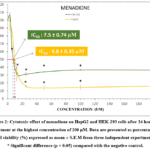 |
Figure 2: Cytotoxic effect of menadione on HepG2 and HEK-293 cells after 24 hours of treatment at the highest concentration of 200 µM. Data are presented as percentage of cell viability (%) expressed as mean ± S.E.M from three independent experiments. |
Notably, HEK-293 cells exhibited even greater sensitivity to the compound, with an IC₅₀ value of 0.48 ± 0.12 µM. The lower inhibitory concentration required to suppress 50% of metabolic activity in normal epithelial cells suggests that the cytotoxic mechanism is not selective for malignant phenotypes. This heightened susceptibility may reflect intrinsic differences in cellular metabolism, antioxidant capacity, membrane composition, or stress-response pathways between the two cell lines.
The disparity in IC₅₀ values between HepG2 and HEK-293 cells highlights an important pharmacological consideration. While potent growth inhibition in cancer cells is desirable, a lower threshold for toxicity in non-malignant cells raises concerns regarding therapeutic safety. The approximately four-fold greater sensitivity of HEK-293 cells indicates that the compound’s bioactivity may be driven by general cytotoxic mechanisms—such as oxidative stress induction, mitochondrial dysfunction, or membrane destabilization—rather than tumor-specific molecular targeting.
From a kinetic perspective, the 24-hour exposure window provides insight into acute cytotoxic effects. The rapid reduction in viability suggests early intracellular disruption rather than delayed cytostatic inhibition. Whether this response reflects apoptosis induction, direct membrane damage, or interference with mitochondrial respiration cannot be conclusively determined from MTT data alone; however, the marked potency at low concentrations supports the hypothesis of efficient cellular uptake and strong intracellular engagement.
Importantly, the reproducibility across triplicate independent experiments indicates that the observed cytotoxic effects are consistent and not attributable to experimental variability. The relatively narrow SEM values further strengthen the reliability of the calculated IC₅₀ parameters.
Collectively, these findings confirm that diphenyltin(IV) N-methyl-N-benzyldithiocarbamate is a highly potent cytotoxic agent in vitro. However, the greater sensitivity observed in HEK-293 cells suggests that the compound lacks intrinsic tumor selectivity, thereby limiting its immediate therapeutic applicability without further structural refinement or targeted delivery strategies.
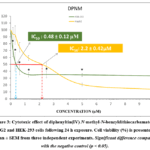 |
Figure 3: Cytotoxic effect of diphenyltin(IV) N-methyl-N-benzyldithiocarbamate on HepG2 and HEK-293 cells following 24 h exposure. Cell viability (%) is presented as mean ± SEM from three independent experiments. |
Selectivity Profile
The calculated selectivity index (SI = 0.22) indicates limited tumor specificity. SI values below 1 suggest that normal cells are more susceptible to the compound than cancer cells, reflecting a narrow therapeutic window. Despite its strong cytotoxic potency, the compound therefore does not currently meet the selectivity criteria generally expected for potential anticancer agents.
Morphological Alterations Induced by Diphenyltin(IV) N-Methyl-N-Benzyldithiocarbamate
Microscopic examination following 24-hour exposure to diphenyltin(IV) N-methyl-N-benzyldithiocarbamate revealed marked structural alterations in both HepG2 and HEK-293 cells compared with untreated controls. Control cells maintained intact plasma membranes, normal cytoplasmic distribution, and firm attachment to the culture surface. In contrast, treated HepG2 cells exhibited reduced cellular volume, cytoplasmic condensation, and prominent membrane blebbing—morphological hallmarks commonly associated with apoptotic progression (Morana et al., 2022; Mustafa et al., 2024). The appearance of apoptotic bodies further supports activation of regulated cell death pathways rather than immediate lytic destruction.
HEK-293 cells demonstrated even more pronounced morphological disruption, consistent with their lower IC₅₀ value and greater sensitivity to the compound. Treated cells displayed rounding, detachment from the substratum, and extensive membrane protrusions. At higher concentrations, both cell lines exhibited additional changes including cellular swelling and compromised membrane integrity, features frequently linked to late-stage apoptosis or necrotic progression (Samaratung et al., 2020). The coexistence of apoptotic and necrotic characteristics suggests that cytotoxic mechanisms may vary depending on intracellular stress intensity, potentially reflecting mitochondrial dysfunction or membrane destabilization induced by organotin complexes (Attanzio et al., 2020).
The morphological findings are consistent with previous reports describing apoptosis induction by organotin derivatives in cancer models (Awang et al., 2025). Importantly, these structural observations corroborate the quantitative reduction in metabolic activity detected by the MTT assay, indicating that the observed decline in viability represents genuine cellular injury. While light microscopy provides valuable structural insight, definitive discrimination between apoptotic and necrotic pathways would require molecular confirmation through assays such as Annexin V/propidium iodide staining or caspase activation analysis (Morana et al., 2022; Mustafa et al., 2024).
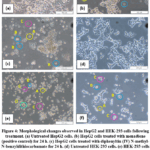 |
Figure 4: Morphological changes observed in HepG2 and HEK-293 cells following treatment Click here to View Figure |
Discussion
The strong cytotoxic activity observed in this study is consistent with previous reports describing the antiproliferative potential of organotin complexes (Pantelic et al., 2021; Rahim et al., 2024). Similar IC₅₀ values have been reported for related organotin derivatives in HepG2 cells, supporting the influence of tin–ligand coordination on biological activity (Blazquez-Tapias et al., 2024; Jiang et al., 2022).
However, the increased sensitivity of HEK-293 cells indicates limited tumor selectivity. This contrasts with studies reporting improved selectivity for certain organotin analogues (Basu Baul et al., 2025; Storozhenko et al., 2024). Such differences are likely associated with variations in ligand structure, which can affect lipophilicity, cellular uptake, and intracellular targeting.
Morphological observations revealed features characteristic of apoptosis, including cellular shrinkage, membrane blebbing, and apoptotic body formation. These findings align with proposed mechanisms in which organotin compounds disrupt membrane integrity and interact with nucleic acids, ultimately activating programmed cell death pathways (Attanzio et al., 2020). At higher concentrations, necrotic features were also observed, suggesting that cytotoxic mechanisms may depend on the intensity of cellular stress.
Although the compound demonstrates strong cytotoxic potency, the low selectivity index indicates that further structural modification is required to improve cancer specificity. Approaches such as ligand modification or targeted delivery strategies may enhance therapeutic selectivity while preserving antiproliferative activity. delivery systems.
Conclusion
Diphenyltin(IV) N-methyl-N-benzyldithiocarbamate exhibits pronounced in vitro antiproliferative activity in both malignant HepG2 and non-malignant HEK-293 cells. While the observed low micromolar IC₅₀ values highlight substantial cytotoxic potency, the absence of cancer-selective toxicity represents a significant limitation. Future investigations should focus on rational structural modification to enhance tumor specificity while preserving cytotoxic efficacy. Mechanistic studies incorporating apoptosis-specific assays and molecular pathway analysis would further clarify the mode of action. Collectively, these findings contribute to the broader effort of refining organotin dithiocarbamate complexes as viable anticancer candidates.
Acknowledgement
The authors gratefully acknowledge the Faculty of Health Sciences, Universiti Kebangsaan Malaysia, for providing laboratory facilities, research infrastructure, and continuous technical support throughout the study. Special thanks are extended to the staff of the Bioserasi and Toxicology Laboratories for their valuable assistance with cell culture maintenance and cytotoxicity assays. The authors also sincerely appreciate the academic guidance, insightful feedback, and constructive recommendations from the supervisory team, as well as the meaningful discussions and support from colleagues and postgraduate students during the experimental work. This research did not receive any specific funding from public, commercial, or not-for-profit funding agencies.
Funding Sources
The author(s) received no financial support for the research, authorship, and/or publication of this article.
Conflict of Interest
The author(s) do not have any conflict of interest.
Data Availability Statement
This statement does not apply to this article.
Ethics Statement
This research did not involve human participants, animal subjects, or any material that requires ethical approval.
References
- Annuar, S. N. S.; Kamaludin, N. F.; Awang, N.; Chan, K. M. Sci. Rep. 2025, 15, 44310.
CrossRef - Arshad, N.; Mir, M. I.; Perveen, F.; Javed, A.; Javaid, M.; Saeed, A.; Channar, P. A.; Farooqi, S. I.; Alkahtani, S.; Anwar, J. Molecules 2022, 27, 1–25.
CrossRef - Awang, N.; Aziz, N. A. A.; Salihin, N. Z. S.; Kamaludin, N. F. Orient. J. Chem. 2025, 41, 749–757.
CrossRef - Basu Baul, T. S.; Brahma, S.; Tamang, R.; Duthie, A.; Koch, B.; Parkin, S. J. Inorg. Biochem. 2025, 262, 1–20.
CrossRef - Blazquez-Tapias, B.; Halder, S.; Mendiola, M. A.; Roy, N.; Sahu, N.; Sinha, C.; Jana, K.; Lopez-Torres, E. Bioinorg. Chem. Appl. 2024, 2024, 1–16.
CrossRef - Despotovic, A.; Mircic, A.; Misirlic-Dencic, S.; Harhaji-Trajkovic, L.; Trajkovic, V.; Zogovic, N.; Tovilovic-Kovacevic, G. Oxid. Med. Cell. Longev. 2022, 2022, 65–98.
- Erfan, A.; Yousif, E.; Alshanon, A.; El-Hiti, G. Al-Nahrain J. Sci. 2024, 27, 70–77.
CrossRef - Gao, S.; Jiang, X.; Wang, L.; Jiang, S.; Luo, H.; Chen, Y.; Peng, C. Front. Pharmacol. 2022, 13, 1–21.
CrossRef - Hadi, S.; Winarno, E. K.; Winarno, H.; Susanto, S.; Thian, D. A. S.; Fansang, M. D.; Berawi, K. N.; Suhartati, T. J. Inorg. Organomet. Polym. Mater. 2024, 34, 2980–2989.
CrossRef - Hamaya, S.; Oura, K.; Morishita, A.; Masaki, T. Int. J. Mol. Sci. 2023, 24, 1–25.
CrossRef - Hamid, A.; Azmi, M. A.; Rajab, N. F.; Awang, N.; Jufri, N. F. Sains Malays. 2020, 49, 1421–1430.
CrossRef - Jain, A.; Hurkat, P.; Shilpi, S.; Mody, N.; Jain, S. K. Drug Deliv. Transl. Res. 2024, 15, 1935–1961.
CrossRef - Jiang, W.; Zhang, Z.; Ni, P.; Tan, Y. Metallomics 2022, 14, 1–14.
CrossRef - Kamiloglu, S.; Sari, G.; Ozdal, T.; Capanoglu, E. Food Front. 2020, 1, 332–349.
CrossRef - Lica, J. J.; Wieczor, M.; Grabe, G. J.; Heldt, M.; Jancz, M.; Misiak, M.; Gucwa, K.; Brankiewicz, W.; Maciejewska, N.; Stupak, A.; Baginski, M.; Rolka, K.; Hellmann, A.; Skladanowski, A. Int. J. Mol. Sci. 2021, 22, 1–24.
CrossRef - Morana, O.; Wood, W.; Gregory, C. D. Int. J. Mol. Sci. 2022, 23, 1–19.
CrossRef - Mustafa, M.; Ahmad, R.; Tantry, I. Q.; Ahmad, W.; Siddiqui, S.; Alam, M.; Abbas, K.; Moinuddin; Hassan, M. I.; Habib, S.; Islam, S. Cells 2024, 13, 1–29.
CrossRef - Pantelic, N. D.; Bozic, B.; Zmejkovski, B. B.; Banjac, N. R.; Dojcinovic, B.; Wessjohann, L. A.; Kaluderovic, G. N. Molecules 2021, 26, 1–15.
CrossRef - Rahim, S.; Sadiq, A.; Javed, A.; Noor, A.; Muhammad, N.; Ibrahim, M.; Qayyum, S.; Ayub, K.; Fatima, N.; Sarfaraz, S.; Assad, M.; Kubicki, M. Arab. J. Chem. 2024, 17, 1–19.
CrossRef - Samaratung, B. D.; Srigley, J. R.; Berney, D. M.; Evans, A.; Furusato, B.; Leite, K. R. M.; Martignoni, G.; Moch, H.; Paner, G.; Ro, J.; Thunders, M.; Wheeler, T.; Van Der Kwast, T.; Williamson, S. R.; Yaxley, J. W. Pathology 2020, 52, 1465–3931.
CrossRef - Shaaban, S.; Negm, A.; Ibrahim, E. E.; Elrazak, A. A. Oncol. Rev. 2014, 8, 25–35.
- Storozhenko, P. A.; Veselova, I. S.; Ovechkina, E. V.; Grachev, A. A.; Korlyukov, A. A.; Volodin, A. D.; Rybalkina, E. Y.; Shestakova, A. K.; Shiryaev, V. I. Biochemistry (Mosc.), Suppl. B 2024, 18, 46–58.
CrossRef - Syed Annuar, S. N.; Kamaludin, N. F.; Awang, N.; Chan, K. M. Food Chem. Toxicol. 2022, 168, 113336.
CrossRef
 PlumX:
  Views: 805 Views
  PDF Downloads: 903
 Accepted on: 10 Apr 2026
Second Review by: Dr. Junaid Ahmed
Final Approval by: Dr. Abdelwahab Omri


ISSN Online: 2231-5039