Rejuvenation of the Yamuna River: Analyzing Pollution and Sustainable Restoration Strategies in the Delhi Stretch
 and Nisha Kumari*
Centre of Excellence for Energy and Environmental Studies, Deenbandhu Chhotu Ram University of Science and Technology, Murthal, Sonipat, Haryana, India
Corresponding Author E-mail address: nishadahiya.energy@dcrustm.org
DOI : http://dx.doi.org/10.13005/ojc/420203
Download this article as:

One of the world's most polluted river systems is the Yamuna, which flows through Delhi's National Capital Territory (NCT). The Yamuna River, considered a lifeline for northern India, is experiencing significant ecological damage, particularly in Delhi region. This deterioration is largely attributed to untreated sewage, and discharge of industrial effluent. An analysis of key water quality indicators Biochemical Oxygen Demand (BOD), Dissolved Oxygen (DO), as well as Fecal Coliform (FC) has highlighted critical pollution levels, rendering river unfit for ecological sustenance. Major issues include inadequate sewage treatment facilities, non-compliance by effluent treatment plants, encroachment on floodplains, and a lack of sufficient environmental flows to support natural self-purification processes. To address this, comprehensive actions are essential, as expanding sewage treatment infrastructure, increasing environmental flows through dam management, rehabilitating degraded floodplains, and promoting wastewater reuse. The study underscores the importance of implementing stricter regulations, utilizing advanced monitoring technologies, and encouraging active community involvement. With these measures, the Yamuna River can be rejuvenated, preserving its ecological balance, agricultural, and economic significance for generations to come.
KEYWORDS:Yamuna River; Water Pollution; Ecological Degradation; Industrial Effluents
Introduction
Water plays a vital role in maintaining the ecological balance of the global environment and is necessary for human survival. The amount of freshwater available in a nation determines its social and economic development. Freshwater sources such as rivers, lakes, tanks, and groundwater have been depleted, contaminated, and destroyed as a result of the widespread exploitation of this vital resource in recent decades. Preventing river water contamination is one of the biggest environmental issues facing the world today. In addition to endangering the aquatic ecosystem, poor river water quality can have deadly effects on people. River water is becoming contaminated due to a number of point and nonpoint pollution sources, including soil erosion, the disposal of untreated wastewater, surface runoff, chemicals from industrial and agricultural processes, and urbanization and rapid economic development.
The Yamuna River, a vital water source for millions in northern India, plays a crucial role in sustaining life and livelihoods, particularly along the densely populated Delhi stretch.1 Delhi, India’s capital and a major urban center with over 20 million residents, significantly contributes to the river’s degradation. Around 70% of the pollution in the Delhi section stems from untreated sewage and industrial waste, primarily entering through major drains like Najafgarh and Shahdara. High levels of BOD and FC make the river water unsuitable for human or ecological purposes. Originating from the Yamunotri glacier in the Himalayas, the Yamuna holds cultural, agricultural, and economic significance. However, its ecological health has been severely compromised, particularly in the 22-kilometer stretch through Delhi. Rapid urbanization, industrial activities, and insufficient wastewater treatment have overwhelmed the river’s natural capacity for self-purification. Despite initiatives such as the Yamuna Action Plan and the operation of 39 Sewage Treatment Plants (STPs) in the city, an untreated sewage gap of 195.44 MGD persists, exacerbating the river’s pollution.2 This study evaluates the Yamuna’s current condition, focusing on pollution levels, primary contamination sources, and the effectiveness of restoration initiatives. Through systematic methodologies that examine water quality and environmental flow impacts, the research emphasizes the pressing need for integrated and sustainable strategies. Restoring the Yamuna’s ecological balance is essential not only for environmental health but also for preserving its cultural and economic value for future generations.3,4 Objectives of the Research is to assess the current water quality of the Yamuna River, particularly focusing on the Delhi stretch and its ecological implications. To identify and evaluate the primary sources of pollution, including untreated sewage, industrial effluents, and inadequate environmental flow. To examine the effectiveness of ongoing restoration efforts and propose sustainable measures for improving the river’s ecological health.
The study adopts a systematic methodology, starting with the collection of secondary data from authoritative sources, including government reports such as the Yamuna Action Plan and publications by the Department of Environment. Key water quality indicators—Dissolved Oxygen (DO), Biochemical Oxygen Demand (BOD), and Faecal Coliform (FC)—are analyzed at critical locations to evaluate pollution levels. The river is divided into distinct ecological zones to explore regional differences in hydrology and pollution levels.
The analysis examines pollution sources by assessing compliance of Common Effluent Treatment Plants (CETPs) and identifying untreated sewage contributions from major drains, such as Najafgarh. Restoration initiatives, including floodplain reclamation and wastewater reuse, are also reviewed to gauge their effectiveness. The findings are synthesized to provide actionable recommendations aimed at improving the Yamuna’s ecological and hydrological health.
The Yamuna River
The Yamuna River having huge cultural as well as religious values in India and is often regarded as sacred in Hindu mythology. It is the fifth-longest river in the country, stretching 1,376 kilometers and covering a drainage area of 366,223 square kilometers within the Gangetic plain (Fig. 1and table -1)5. Primarily a rain-fed river, the Yamuna derives most of its water from rainfall and groundwater, with only about 9% coming from glacial and snowmelt sources. The river originate from the Yamunotri glacier in lower Himalaya, at an elevation of approximately 6,387 meters6,7.
As a major tributary of the Ganges, the Yamuna flows through northern India, passing important cities as Delhi, Agra and Mathura. It supports a densely populated basin and is vital for agriculture, drinking water, and industrial activities6. However, despite its significance, the Yamuna ranks among the most polluted rivers in India. The problem is especially acute in the Delhi stretch, where untreated sewage and industrial discharges are the primary contributors to its degradation (Dhillon et al., 2013)6.
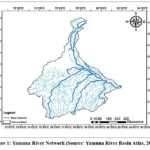 |
Figure 1: Yamuna River Network (Source: Yamuna River Basin Atlas, 2021) Click here to View Figure |
Table 1: Yamuna River Catchment Area
|
Name of State |
Percentage Contribution | Total Catchment Area in Yamuna (in Sq. Km.) |
| Madhya Pradesh | 40.6% |
14028Km2 |
|
Rajasthan |
29.8% | 102883Km2 |
| Uttar Pradesh | 21.5% |
74208Km2 |
|
Haryana |
6.5% | 21265Km2 |
| Himachal Pradesh | 1.6% |
5799Km2 |
|
Delhi |
0.4% |
1485Km2 |
(Source: Yamuna Action Plan, National River Conservation Directorate (NRCD))
Result and Discussion
The Yamuna River: An Exploration of Its Path
The Yamuna River, traversing northern India, flows through varied landscapes that can be divided into five distinct ecological and hydrological segments: the Upper Segment, Himalayan Segment, Delhi Segment, Diluted Segment, Eutrophicated Segment (Fig -2)6. In Haryana, the river reaches Hathnikund (formerly Tajewala) and flows past Ponta Sahib. Here, its waters are diverted into two essential irrigation systems: the Western Yamuna Canal (WYC) and the Eastern Yamuna Canal (EYC). During the dry season, the river stretch between Tajewala and Delhi often experiences reduced flow or dries up entirely due to insufficient downstream discharge at the Tajewala barrage. This issue is partially mitigated by groundwater recharge and additional water from a feeder channel linked to the Som Nadi upstream of Kalanaur. After covering approximately 224 kilometers, the Yamuna River enters Delhi near Palla village. At this point, water is extracted at the Wazirabad barrage to meet city’s drinking water needs. Around 22 kilometers downstream from Wazirabad, the river reaches the Okhla barrage, where its flow is diverted into the Agra Canal, primarily for irrigation purposes. Beyond the Okhla barrage, Yamuna receives effluents from the Shahdara drain—a major wastewater outlet that carries untreated sewage and industrial waste from Noida, East Delhi, and Sahibabad. This discharge severely deteriorates the river’s water quality8.
The Yamuna River completes its journey at Prayag (Allahabad), where it merges with the Ganga and the mythical Saraswati River. Along its course, the Yamuna is fed by several tributaries, which contribute to its flow and water quality. Detailed studies by Sharma and Gupta9, Mishra10, and Sharma11 provide valuable insights into the factors affecting the river’s water quality, highlighting the ecological and anthropogenic pressures that impact its health.
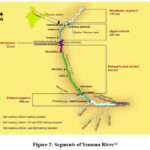 |
Figure 2: Segments of Yamuna River12 Click here to View Figure |
Restoring The Yamuna: Delhi’s Efforts To Reclaim Its River
The Yamuna River, a vital water source for Delhi, flows through a 22-kilometer stretch between the Wazirabad Barrage and the Okhla Barrage. This segment is among the most polluted river stretches in India, with over 70% of its pollution load originating from 22 major drains. Notably, the Najafgarh Drain contributes 68.71% of the total wastewater flow, while the Shahdara Drain accounts for 10.9%. Water quality monitoring has revealed alarming levels of pollution, with Biochemical Oxygen Demand (BOD) reaching 24.5 mg/l at Okhla Barrage—far exceeding the permissible limit of ≤3 mg/l—and Faecal Coliform (FC) levels surpassing 7,200 MPN/100 ml at downstream locations, compared to the standard of ≤500 MPN/100 ml. Delhi currently operates 39 Sewage Treatment Plants (STPs) with a total capacity of 712 MGD, treating 596.56 MGD of sewage, leaving an untreated gap of 115.44 MGD. Efforts are underway to increase sewage treatment capacity to 964.5 MGD by 2026 and improve environmental flow (e-flow). However, the current e-flow of 10 Cumecs falls significantly short of the recommended 23 Cumecs needed for adequate dilution, emphasizing the need for urgent and additional measures to restore the river’s ecological health.
Table 2: Annual Average Biochemical Oxygen Demand (BOD) Levels Along the Yamuna River, Delhi (2017–2024)
|
Year |
Palla (mg/l) | Wazirabad (mg/l) | ISBT Bridge (mg/l) | ITO Bridge (mg/l) | Nizamuddin Bridge (mg/l) | Agra Canal at Okhla (mg/l) | Okhla Barrage (mg/l) |
Asgarpur (mg/l) |
|
2017 |
2.8 | 7.4 | 10.2 | 16.5 | 22.8 | 25.2 | 27.5 | 30.0 |
| 2018 | 2.9 | 7.6 | 10.5 | 17.2 | 23.5 | 25.8 | 28.0 |
31.2 |
|
2019 |
2.8 | 7.8 | 10.7 | 17.5 | 24.0 | 26.0 | 28.5 | 31.5 |
| 2020 | 2.7 | 7.5 | 10.3 | 16.8 | 23.2 | 25.5 | 27.8 |
30.8 |
|
2021 |
2.6 | 7.4 | 10.1 | 16.2 | 22.5 | 25.0 | 27.2 | 30.2 |
| 2022 | 2.6 | 7.2 | 9.8 | 15.8 | 21.8 | 24.5 | 26.8 |
29.8 |
|
2023 |
2.5 | 7.0 | 9.6 | 15.4 | 21.5 | 24.2 | 26.5 | 29.5 |
| 2024 | 2.5 | 6.8 | 9.3 | 15.0 | 21.0 | 23.8 | 26.0 |
29.0 |
(Source: Department of Environment, Govt. of NCT of Delhi, 2025)
The Annual Average Biochemical Oxygen Demand (BOD) Levels Along the Yamuna River (2017–2024) shown in table- 2 reveal a concerning decline in water quality as the river flows from upstream to downstream locations. At Palla, BOD levels remain within acceptable limits (~2.5–2.9 mg/l), indicating minimal organic pollution. This makes the water suitable for aquatic life, drinking water treatment, and recreational use. However, as the river moves downstream, BOD levels raise sharply, reaching ~26.0–31.5 mg/l at Okhla Barrage and Asgarpur. This significant increase is attributed to untreated sewage and industrial effluents, making the water unsuitable for aquatic ecosystems, irrigation, or industrial cooling without substantial treatment. While the data shows a marginal improvement in BOD levels at some locations (e.g., Nizamuddin Bridge) from 2017 to 2024, reflecting the positive effects of interventions like sewage treatment plant upgrades and stricter industrial compliance, the steep rise in BOD levels downstream underscores the need for intensified efforts. Addressing the primary sources of pollution is untreated sewage as well as industrial waste, is vital to refining the overall water quality of Yamuna River 13. BOD level at Yamuna river from 2003 to 2023 shown in fig. 3.
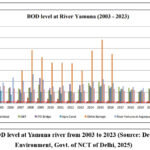 |
Figure 3: BOD level at Yamuna river from 2003 to 2023 (Source: Department of Environment, Govt. of NCT of Delhi, 2025) Click here to View table |
Water Quality Monitoring
Water quality monitoring conducted by Delhi Pollution Control Committee (DPCC) evaluates key parameters DO, BOD, and FC at eight strategic locations to gauge pollution levels in the Yamuna River14. DO levels, critical for sustaining aquatic life, frequently fall below the acceptable threshold of 5 mg/l in most sections downstream of Palla (Table- 3). Similarly, BOD levels, which reflect organic pollution, consistently exceed the permissible limit of 3 mg/l. FC levels, indicating microbial contamination, are alarmingly elevated in urban stretches, highlighting significant public health and environmental concerns.
Table 3: Water Quality Parameters Across Key Locations (2024)
|
Location |
DO (mg/l) | BOD (mg/l) | FC (MPN/100 ml) |
| Palla | 6.5 | 2.8 |
480 |
|
Wazirabad |
4.2 | 7.5 | 2100 |
| Okhla Barrage | 2.8 | 24.5 |
4800 |
|
Asgarpur Village |
2.0 | 29.0 |
7200 |
(Source: Department of Environment, Govt. of NCT of Delhi, 2025)
The analysis reveals that upstream locations such as Palla show better water quality due to less anthropogenic activity, while downstream areas like Okhla Barrage suffer from extreme pollution levels.
Sewage Treatment and Management
Delhi generates approximately 792 MGD of sewage, but its existing infrastructure can treat only 596.56 MGD, leaving a significant amount of untreated sewage to flow into the Yamuna River. The city operates 39 Sewage Treatment Plants (STPs) with a combined installed capacity of 712 MGD. Despite this, a substantial treatment gap persists. Plans are underway to address this issue by increasing the total treatment capacity to 964.5 MGD by 2026 (Table- 4). This will be achieved through the construction of new STPs and the rehabilitation of existing facilities.
Table 4: Sewage Treatment Capacity and Gaps (2023-2026*)
|
Year |
Sewage Generated (MGD) | Installed Capacity (MGD) | Treated Sewage (MGD) | Untreated Sewage (MGD) |
| 2023 | 792 | 712 | 596.56 |
195.44 |
|
2026* (Target) |
964.5 | 814 | 749 |
150.5 |
(Source: Department of Environment, Govt. of NCT of Delhi, 2025)
The government has also prioritized the construction of 40 new Decentralized Sewage Treatment Plants (DSTPs), which will add an additional 92 MGD to the treatment capacity. Additionally, 18 existing STPs are undergoing rehabilitation to improve their efficiency.
Industrial Effluent Management
Industrial pollution is a major factor in the Yamuna River’s degradation. Delhi operates 13 Common Effluent Treatment Plants (CETPs) with a combined installed capacity of 212.3 MLD (Table- 5). However, their utilization remains significantly low, at only 33.6%. Additionally, many CETPs fail to meet compliance standards, further contributing to river’s pollution load and undermining efforts to improve water quality.
Table 5: Performance of Common Effluent Treatment Plants (CETPs)
|
CETP Location |
Installed Capacity (MLD) | Utilized Capacity (%) | Compliance Status |
| Narela | 22.5 | 64.2 |
Partially Compliant |
|
Bawana |
35 | 71.3 | Non-Compliant |
| Remaining CETPs | 154.8 | 67.5 |
Non-Compliant |
(Source: Department of Environment, Govt. of NCT of Delhi, 2025)
To address this, the government has imposed penalties totaling ₹19.10 crore on non-compliant CETPs. Additionally, the Narela and Bawana CETPs are being upgraded to improve their efficiency and compliance with environmental standards.
Environmental Flow (E-Flow)
The environmental flow (e-flow) in the Yamuna is crucial to dilute pollutants and maintain the river’s ecological health. However, the current e-flow from Hathnikund Barrage is approximately 10 Cumecs, far below the recommended 23 Cumecs for the lean season (Table- 6). This deficit severely limits the river’s capacity to self-purify.
Table 6: E-Flow Requirements and Current Status (2024)
|
Month |
Current Flow (Cumecs) | Recommended Flow (Cumecs) | Gap (Cumecs) |
| January | 10 | 23 |
13 |
|
May |
10 | 23 | 13 |
| September | 10 | 23 |
13 |
(Source: Department of Environment, Govt. of NCT of Delhi, 2025
Future measures include the completion of Renuka, Lakhwar, and Kishau dam projects, which are expected to increase the e-flow significantly. The revision of the 1994 water-sharing agreement among riparian states is also critical to ensure equitable water distribution.
Floodplain Restoration
Floodplain restoration projects are a vital part of the Yamuna rejuvenation plan. Initiatives like Kalindi Biodiversity Park and Asita East Wetland aim to reclaim degraded floodplains and enhance biodiversity. These projects have reclaimed over 1,536 acres of floodplain land and removed 72,410 metric tons of construction and demolition waste (Table-7). The restored areas now feature public utilities such as pedestrian pathways, cycling tracks, and bio-toilets, contributing to both environmental and social benefits.
Table 7: Status of Floodplain Restoration Projects
|
Project |
Area (Ha) | Status |
| Kalindi Biodiversity Park | 115 |
Completed |
|
Asita East Wetland |
107 | Under Progress |
| Yamuna Vanasthali | 236.5 |
Completed |
(Source: Department of Environment, Govt. of NCT of Delhi, 2025)
Utilization of Treated Wastewater
The reuse of treated wastewater is an essential strategy to reduce the pollution load on the Yamuna. Currently, 125 MGD of treated water is being utilized for purposes such as horticulture, lake rejuvenation, and groundwater recharge (Table-8). Efforts are underway to expand the use of treated water for industrial and construction purposes, thereby reducing reliance on freshwater sources.
Table 8: Treated Wastewater Utilization (2024)
|
Purpose |
Volume (MGD) |
| Horticulture |
90 |
|
Lake Rejuvenation |
35 |
| Groundwater Recharge |
70 |
(Source: Department of Environment, Govt. of NCT of Delhi, 2025)
Challenges in Yamuna River Management
High Pollution Levels: The Yamuna, particularly in the Delhi stretch, is heavily polluted. BOD levels often exceed 30 mg/l at critical points like Okhla Barrage, far above the permissible limit of 3 mg/l. Faecal Coliform levels indicate significant microbial contamination due to untreated sewage discharge, reaching over 7,000 MPN/100 ml.
Insufficient Sewage Treatment: Delhi generates approximately 792 MGD of sewage, but treatment facilities can only process 596.56 MGD, leaving a gap of 195.44 MGD of untreated sewage.
Industrial Effluent Discharge: Many Common Effluent Treatment Plants (CETPs) operate below capacity or fail to meet compliance standards, exacerbating pollution from industrial sources.
Deficient Environmental Flow (E-Flow): The current e-flow of ~10 Cumecs is insufficient to dilute pollutants and sustain ecological health. The recommended flow is at least 23 Cumecs for lean seasons.
Encroachment on Floodplains: Urbanization has significantly degraded river’s floodplains, reducing their capacity to act as natural buffers against pollution.
Drains Carrying Untreated Wastewater: Major drains, including Najafgarh and Shahdara, contribute over 70% of the total pollution load, with inadequate tapping and treatment measures.
Inadequate Public Awareness and Participation: Limited engagement with local communities hampers sustainable solutions and the implementation of behavior-based interventions.
Measures To Address Challenges
Enhancing Sewage Treatment Capacity: Increase STP capacity to 964.5 MGD by 2026, complemented by the construction of 40 Decentralized Sewage Treatment Plants (DSTPs). Upgrade existing STPs and ensure 100% compliance with BOD and TSS standards.
Improving Industrial Effluent Management: Upgrade CETPs to enhance utilization and compliance rates, particularly in industrial clusters like Narela and Bawana. Impose stricter penalties on non-compliant units to discourage untreated effluent discharge.
Increasing E-Flow: Expedite the construction of Renuka, Lakhwar, and Kishau dams to boost water availability. Revise the 1994 water-sharing agreement to ensure equitable distribution among riparian states.
Floodplain Restoration: Reclaim degraded floodplains through projects like Asita East Wetland and Kalindi Biodiversity Park. Use restored areas for ecological functions, as biodiversity enhancement and groundwater recharge.
Tapping Drains: Ensure complete tapping of all major drains, prioritizing heavily polluting sources like Najafgarh and Shahdara drains. Redirect stormwater drains to nearby DJB sewer systems.
Utilization of Treated Wastewater: Increase reuse of treated wastewater for horticulture, construction, and groundwater recharge. Current utilization stands at 125 MGD, with potential expansion.
Public Engagement and Monitoring: Enhance awareness campaigns about pollution control and sustainable practices. Implement strict monitoring mechanisms using advanced technologies like real-time water quality sensors.
Limitation
It should be noted that this review study has some inherent limitations even though it provides useful information about the water quality of the River Yamuna. The entire Yamuna River may not have as much data on water quality, with some regions having more thorough data than others. It can be challenging to identify the precise underlying cause of pollution along the Yamuna River because there are so many different and often connected sources of pollution. A more comprehensive assessment of the health impact of HMs requires more scientific research, even though the review addresses the potential effects of HMs on human health. Despite the inclusion of studies from numerous states, the amount of comprehensive research on the Yamuna River’s water quality may be limited, particularly in certain areas and regions that require further investigation. Even though the study highlights the importance of wastewater management, the difficulties in setting up and maintaining efficient wastewater treatment systems in different geographic locations must still be taken into account.
Conclusion
The Yamuna River, particularly along its stretch through Delhi, is experiencing significant ecological degradation due to untreated sewage, industrial effluents, and insufficient environmental flow. Despite initiatives such as the Yamuna Action Plan, critical water quality indicators DO, BOD, and FC remain alarmingly poor, making the river unfit for ecological or human use. Key challenges include inadequate sewage and effluent treatment capacity, low compliance rates among treatment plants, reduced environmental flows, and extensive encroachment on floodplains. Addressing these issues requires integrated solutions, such as upgrading and expanding sewage and effluent treatment infrastructure, restoring environmental flows through dam management projects, reclaiming degraded floodplains, and encouraging wastewater reuse. The research underscores the importance of strict regulatory enforcement and active community participation to ensure sustainable improvements. Adopting a holistic and collaborative approach can revitalize the Yamuna, restoring its ecological health and reaffirming its vital role in supporting the region’s environment, culture, and economy.
Acknowledgement
The authors are thankful to DCRUST, Murthal for lab facilities.
Funding Sources
The author(s) received no financial support for the research, authorship, and/or publication of this article.
Conflict of Interest
The author(s) do not have any conflict of interest.
Data Availability Statement
This statement does not apply to this article.
Ethics Statement
This research did not involve human participants, animal subjects, or any material that requires ethical approval.
References
- Gopal, B., & Sah, M. Environmental Conservation, 1993, 20, 243 – 254.
CrossRef - Dhillon, M. K., George, M., & Mishra, S. International Journal on Environmental Sciences, 2013, 3, 1416-1423.
- Sinha S. Bullet Pure Appl Sci Zoology. 2023. https://doi.org/10. 48165/bpas.2023.42A.1.10
CrossRef - Zehra R, Singh SP, Verma J, Kulshreshtha A. Environ Monit Assess, 2023, 195(4):480. https://doi.org/ 10.1007/s10661-023-11072-5
CrossRef - Basu, P. J3ea, 2007, 11, 74-76. https://doi.org/10.5038/2162-4593.11.1.7
CrossRef - Jaiswal, M., Hussain, J., Gupta, S. K., Nasr, M., & Nema, A. K. Environmental monitoring and assessment, 2019, 191(4), 208.
CrossRef - Bookhagen, B., Burbank, D.W., Geophys. Res. Earth Surf. 2010. 115, F03019.
CrossRef - Dar JA. Analysis of the water quality status of the Yamuna river in the Delhi region, 2023.
- Sharma S, Gupta AS. Eco Environ Conserv, 2022, 28:284–287. https://doi.org/ 10.53550/EEC.2022.v28i06s.0048
- Mishra AK. J Water Resour Prot, 2010, 2:489. https://doi.org/10.4236/jwarp.2010.25056
CrossRef - Yadav S, Bajar S, Hemraj, Rohilla R, Chhikara SK, Dhankhar R. Sustainable Water Resources Management. 2023 ;9(6):174.
CrossRef - Prashant, Shubham Saurabh, Shubham Saxena, Shantanu Chaudhary, Snehil Mishra, International Journal of Advance Research in Science and Engineering, 2016, Vol. No.5, Issue, No.3.
- Kanojia, D., Kaur, M., Zai, M., & Srivastava, I. International Journal of Advanced Research and Development, 2018, 3, 603-607 (2018).
- Sharma, D., and Kansal, A. Water Sci. 2011, 1, 147–157. doi:10.1007/s13201-011-0011-4.
CrossRef
 PlumX:
  Views: 4657 Views
  PDF Downloads: 1314


ISSN Online: 2231-5039